

Introduction
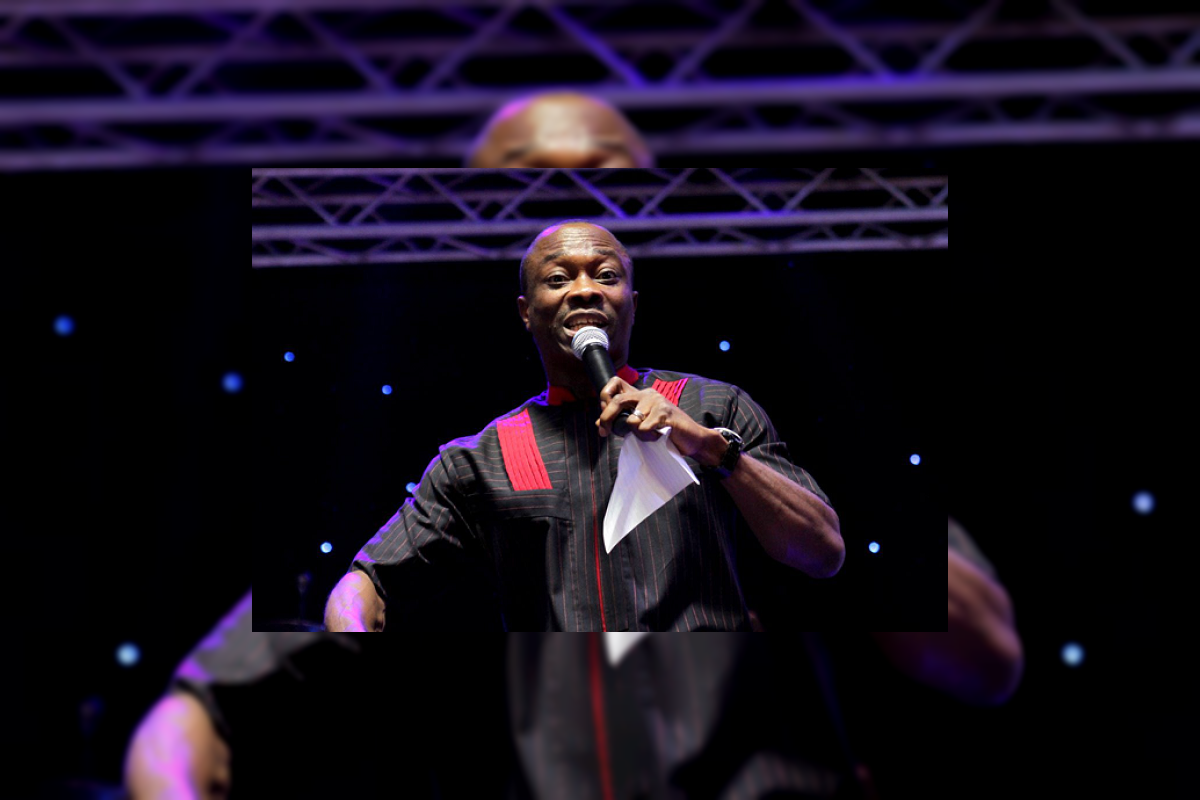
There are comedians who make people laugh, and then there are comedians who build the very infrastructure of laughter. Julius Agwu known across Nigeria as Julius D'Genius belongs firmly in the second category. A standup comedian, actor, singer, master of ceremonies, producer, author, and entrepreneur, Julius Agwu is one of the most multidimensional entertainers Nigeria has ever produced. He didn't just perform on stages he built them, and then filled them with comedians who would go on to become legends in their own right.
Born into a family without wealth in the oil-rich but economically unequal Port Harcourt, Julius Agwu's story is a textbook case of talent meeting tenacity. He sold wares on the street as a boy, self funded his university education, and clawed his way from the very bottom of Nigerian society to its most celebrated stages from the NTA studios of Port Harcourt to the Indigo O2 in London. He pioneered musicomedy a unique fusion of music and comedy that no Nigerian had attempted before him and produced comedy shows like Crack Ya Ribs and Laff 4 Christ's Sake that became annual institutions on the Nigerian entertainment calendar.
I was born without a spoon, talk more of a silver spoon.
Yet his story is also one of profound human struggle. In 2015, three brain tumours were discovered in his skull, one the size of a golf ball. He underwent surgery in America, suffered a near fatal relapse, was briefly declared dead, and somehow came back to perform, to produce, and to laugh again. His resilience in the face of illness, financial setback, and personal heartbreak has made him not just an entertainer, but an enduring symbol of survival.
Early Life & Family Background
Julius Agwu was born on April 7, 1973, in Choba, a community in the Obio/Akpor Local Government Area of Rivers State, Nigeria. He is the fifth of six children born to Chief Augustine Amadi Agwu and Mrs. Mary Agwu. His family was not wealthy Julius has spoken candidly throughout his career about growing up in poverty, describing himself as someone born without a spoon, talk more of a silver spoon.
To help his family, the young Julius became a street hawker, selling wares in Port Harcourt's markets before school each morning. This daily hustle made him a habitual latecomer to school but it also gave him his first comedy stage. Whenever he arrived late, his teacher would pull him to the front of the class and ask him to entertain his classmates as punishment. What began as a disciplinary ritual quickly became a calling. Julius discovered that making people laugh wasn't just a coping mechanism it was a gift.
The streets of Port Harcourt sharpened his observational instincts. One of his favourite routines as a child was stopping at market squares to mimic Uncle JB, a popular local drug vendor an act that drew crowds of onlookers and gave him an early taste of commanding an audience. Long before he had a microphone or a stage, Julius Agwu had an audience.
Education
Julius Agwu completed his entire formal education within Port Harcourt. He attended Elementary State School and UBE Primary School, both in Choba, for his foundational education. For secondary school, he enrolled at Government Secondary School, Borokiri, Port Harcourt, before completing his O-Levels at Akpor Grammar School, Ozoba where he served as Social Prefect and President of the Dramatic, Debating, and Cultural Society.
Against the odds of poverty and self-funding, Julius gained admission to the University of Port Harcourt, where he studied Theatre Arts first at the diploma level specialising in acting, then proceeding to a full Bachelor of Arts degree in Theatre Arts. He was adjudged the best student in his graduating class of 1997. It was at UNIPORT that he first crossed paths with actors like Francis Duru, and where his comedic instincts found an academic framework and professional community.
Unlike many entertainers who stumble into the arts, Julius chose it deliberately and pursued it with academic rigour. He also joined the choir as a student the beginning of the musical thread that would later weave into his entertainment identity.
Acting Career From Rattle Snake to Nollywood
Julius Agwu's acting career predates his stand-up fame. While still hustling between Port Harcourt and Lagos in the early 1990s, he landed his first movie role in 1993 a feature in Rattle Snake, one of the defining early films of what would become Nollywood. His second film, End of the River, followed shortly after and reportedly birthed the famous Odeshi slang in popular Nigerian culture.
Before breaking fully into film, Julius had become a member of a travelling theatre troupe owned by Innocent Ohiri in 1985, performing across multiple cities. He also appeared in the popular NTA sitcom Paradise Park, which established his credibility as a screen actor. He later appeared in the NTA comedy programme Laugh Line (later renamed Humour on Ice), which gave him consistent national television visibility.
Selected filmography:
- Rattle Snake (1993) — debut film role
- End of the River (1993) — origin of the "Odeshi" cultural slang
- Lagos Boys (2003)
- King Jaja of Opobo
- The Gods Also Cry — self-produced, directed & starred
- After Count (2011)
- Torn (2013)
- A Long Night (2014)
- Dognapped (2017)
- Wives on Strike (2017)
- Badamasi (2021)
- The Vendor (2024) comeback role
In a 2026 interview, Julius reflected on his acting identity, noting that when he attends comedy shows, younger comedians often remix his original material. He described himself with characteristic dry wit as a grandfather in fact, an ancestor when it comes to comedy.

Stand-Up Comedy Career
Julius Agwu's formal stand-up debut on a major national platform came in 1996, when he featured in the first edition of Night of a Thousand Laughs held at the University of Lagos. That single appearance signalled his arrival on the national comedy stage and marked the beginning of a career that would redefine Nigerian standup comedy.
Julius's comedic style is rooted in everyday Nigerian life the markets, the streets, the churches, the family homes of a society navigating modernity and tradition simultaneously. He draws from personal experience, cultural observation, and character mimicry, often performing in both English and local dialects. His jokes, as he has described them, are not invented they are real things that happened, retold with comic precision.
He is widely regarded as one of the first Nigerian comedians to take stand-up comedy abroad as a deliberate diaspora serving enterprise staging shows in Atlanta, Maryland, London, Manchester, Glasgow, and New York, giving Nigerians in the diaspora a taste of home.
Crack Ya Ribs Building an Empire
Crack Ya Ribs is Julius Agwu's annual comedy concert and one of the most beloved and long running comedy brands in Nigerian entertainment history. The show toured cities across Nigeria and eventually went international, with the London edition becoming a landmark event in the UK's Nigerian diaspora calendar. By 2013, Julius had moved the London show to the famous Indigo O2 to mark his 40th birthday.
The show became a launchpad for dozens of comedians. Julius has spoken openly about mentoring entertainers who are now major names in the industry, providing platforms for younger talents when they had none.
In 2005, he introduced a second show brand Laff 4 Christ's Sake a gospel flavoured comedy evening designed specifically for Christian audiences, blending standup comedy with gospel music. Despite the health crisis that silenced him from 2015 to the early 2020s, Julius returned to stage with a Crack Ya Ribs Port Harcourt edition on Christmas Day 2024, declaring his resting period was over. In 2023, he held a special 50th birthday edition of Crack Ya Ribs in London.
Musicomedy Pioneering a New Genre
Julius Agwu single handedly founded the genre known as musicomedy in Nigeria a fusion of standup comedy and music performance that made his live shows uniquely electric. He became the first Nigerian comedian to release a comedy album, a landmark move that opened the door for countless others who followed.
His musical roots ran deep he had been a chorister from a young age, developing his voice in church before channelling it into his performances. Songs like Everybody Showunhand became cultural sensations. His 2015 thanksgiving single Second Chance, released after his brain surgery, carried the weight of a man who had genuinely returned from the dead.

Business Ventures & Philanthropy
Julius Agwu is the MD/CEO of Reellaif Limited, a music and movie production company he founded to give institutional structure to his creative and commercial ambitions. The company has been the vehicle through which his shows, albums, and productions have been packaged and delivered to audiences in Nigeria and abroad.
Beyond business, Julius has demonstrated a consistent commitment to social responsibility through the Julius Agwu Foundation for the Youths (JAFOY). Through JAFOY, he has run annual football talent hunts in Port Harcourt, supported orphanages, and created platforms for young Nigerians to develop and showcase their talents. He also serves as an entertainment consultant and motivational speaker, and has published an autobiography titled Jokes Apart, launched in 2013.
Health Crisis Brain Tumour, Surgery & Survival
In 2015, Julius Agwu's life changed dramatically when an MRI scan revealed three tumours in his brain one at the back of his head and another dangerously close to the brain itself, the size of a golf ball. He underwent successful brain surgery at Park Plaza Hospital in Houston, Texas, USA, where the tumours were removed. He released a thanksgiving song, Second Chance, and returned to London to stage his annual show only to suffer a near fatal relapse just two days before the performance.
He was rushed to hospital, fell into a coma for three months, and was at one point briefly declared dead. His elder sister pleaded with hospital staff not to take him to the mortuary and gathered people to pray for him. He woke up.
died and woke up. I met people who had died they hugged me and said 'welcome, welcome.' Then I came back.
The illness took a devastating toll financially, physically, and personally. Julius has spoken openly about gathering his property documents to hand to his wife, believing he would not survive. By 2024, he had declared himself fully back performing, producing, and doing what he was born to do.

Personal Life & Marriage
Julius Agwu married Ibiere Maclayton on May 31, 2008, after reportedly financing her education in Canada before their union. The couple had two children together a daughter named Zahra and a son named Zadok. Ibiere stood by Julius through the brain tumour diagnosis, surgery, coma, and the long recovery even as financial pressure mounted.
In 2022, after nearly 14 years of marriage, the union ended. Ibiere reverted to her maiden name and relocated abroad with their children. Julius confirmed the split publicly, saying his wife told him she was tired of the marriage. He later reflected that the marriage had not been built on a spiritual foundation and that he bore personal responsibility for some of its fractures.
Awards & Recognition
| Award / Recognition | Category / Achievement |
|---|---|
| Nigeria Entertainment Awards | Best Comedian |
| City People Entertainment Awards | Comedian of the Year |
| Best Graduating Student | University of Port Harcourt, Theatre Arts, 1997 |
| Pioneer Achievement | First Nigerian comedian to release a comedy album |
| Pioneer Achievement | Founder of musicomedy genre in Nigeria |
| Pioneer Achievement | First to take stand-up comedy shows to the diaspora as a formal enterprise |
| Autobiography published | Jokes Apart — 2013 |
Controversies
Julius Agwu's most significant personal controversy surrounds the breakdown of his marriage to Ibiere Maclayton. While Julius described a mutual parting of ways, public speculation included allegations of infidelity during his peak years claims never officially confirmed but widely discussed. Julius acknowledged personal failings in interviews without specifically confirming the allegations, framing the marriage's end as a spiritual lesson rather than apportioning blame.
In 2014–2015, Julius briefly declared an interest in running for the gubernatorial election in Rivers State, surprising many who knew him purely as an entertainer. The announcement received mixed reactions, and he did not proceed with the candidacy.
Legacy & Impact
To measure Julius Agwu's legacy, one must count what Nigerian comedy looked like before Crack Ya Ribs took it to London's O2 arena, before a Nigerian comedian had released an album, before the diaspora had a dedicated comedy show to call their own. Julius D'Genius Agwu changed all of those things alone, without a template, without precedent, without a wealthy family behind him.
He trained and platformed an entire generation of comedians who are now household names. He built a music genre. He produced a television career, a film career, and a philanthropic institution all from the same streets of Port Harcourt where he once hawked goods and entertained market crowds to avoid school punishment.
His survival of a near-fatal brain illness and his return to the stage has added a dimension to his story that transcends entertainment. Julius Agwu is, by any measure, a man who has earned the right to call himself a legend. And the Nigerian entertainment industry, which he helped to build, owes him a debt that no award can fully repay.
Filmography (Selected)
| Title | Year | Role / Notes |
|---|---|---|
| Rattle Snake | 1993 | Debut film role |
| End of the River | 1993 | Origin of "Odeshi" slang |
| Lagos Boys | 2003 | Actor |
| King Jaja of Opobo | — | Actor |
| The Gods Also Cry | — | Producer, director & actor |
| After Count | 2011 | Actor |
| Torn | 2013 | Actor |
| A Long Night | 2014 | Actor |
| Dognapped | 2017 | Actor |
| Wives on Strike | 2017 | Actor |
| Badamasi | 2021 | Actor |
| The Vendor | 2024 | Actor — comeback role |

Comments (0)
No comments yet. Be the first!
Please login to leave a comment
Login to Comment